Abstract
Energy transitions are shaped not only by technology but also by governance, institutions, and socio-political dynamics. This post compares Kenya and Europe, highlighting how power, policy, and emerging technologies like artificial intelligence (AI) influence renewable energy adoption, resilience, and equity. It examines governance mismatches, path dependence, and system risks to offer insights for policymakers, researchers, and practitioners.
The New Politics of Energy Transitions
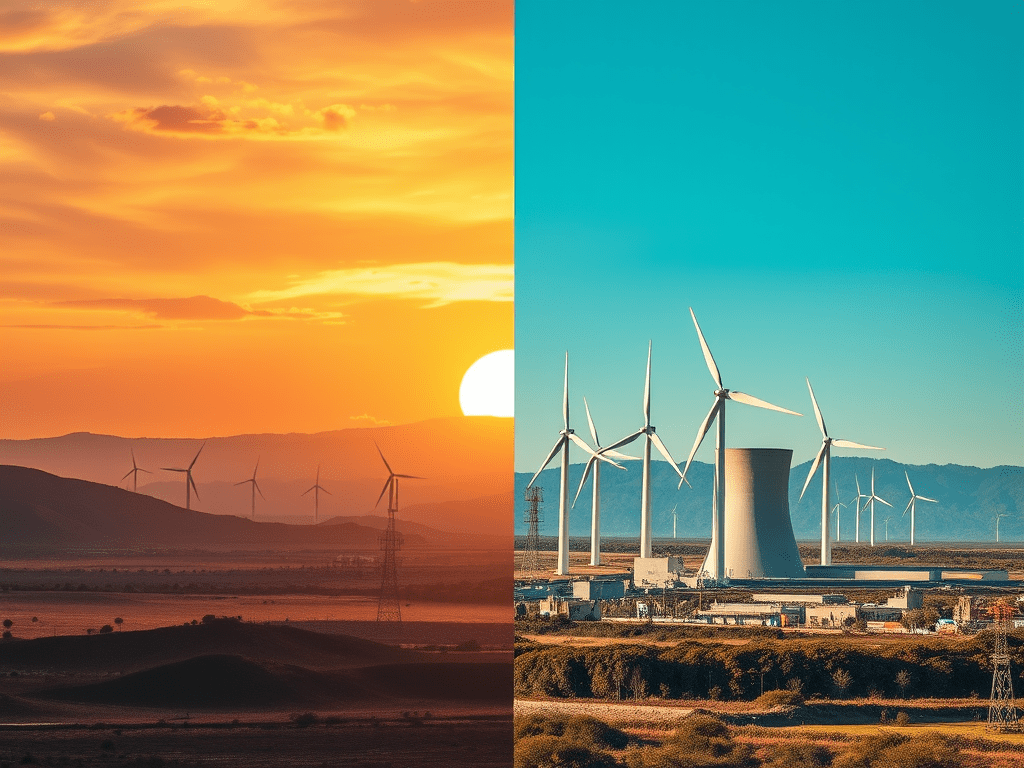
Clean energy is not just about technology, it is about politics, institutions, and people. Kenya’s Rift Valley harnesses extensive geothermal resources, while Europe relies on nuclear plants and offshore wind to meet low-carbon goals. Both regions face the question:
“How can governments keep pace with rapid technological change while responding to public expectations?”
Using a social-ecological-technical-political (SETP) lens, this blog explores governance mismatches, emerging technologies like AI, and the power dynamics shaping renewable energy futures.

1. The Governance Challenge: Aligning Power and Policy
Kenya’s renewable energy sector reflects both progress and contradiction. With over 81% of its electricity from renewable sources mainly geothermal, wind, and hydropower the country is often cited as a leader in Africa’s green transition (EPRA, 2025).
Beneath this success lie deep governance mismatches:
- Temporal: short political cycles vs. long-lived infrastructure
- Spatial: urban grid priorities vs. rural energy access
- Functional: overlapping mandates across agencies like the Ministry of Energy, Energy and Petroleum Regulatory Authority (EPRA), National Environmental Management Authority (NEMA), and Kenya Power and Lighting Company (KPLC)
- Strategic: donor-driven objectives vs. community needs
These mismatches create inefficiencies. Even well-funded solar mini-grid projects often stall when regulatory approvals move more slowly than financing. Political turnover further disrupts continuity.
Europe faces similar friction. EU directives like the European Green Deal and Corporate Sustainability Reporting Directive (CSRD) set long-term goals, yet national politics and market pressures can dilute their impact (Jankovska, 2025). Germany, Finland, and France pursue divergent energy mixes, illustrating the tension between sovereignty and collective climate goals.
2. Path Dependence and Institutional Lock-In
Energy transitions unfold within inherited systems. Kenya’s centralized grid and donor-dependent legacy shape institutional behavior. Public utilities, ministries, and financiers often perpetuate risk-averse practices, reinforcing dependence on large-scale infrastructure (Pedersen & Nygaard, 2018). Meanwhile, small-scale solar innovators must navigate overlapping regulations and uncertain feed-in tariffs.
Europe faces a different form of lock-in: historical investments in nuclear and natural gas infrastructures limit the speed of renewable integration. Even with strong climate commitments, inertia in regulatory and market systems slows reform.
“Energy transitions are as much about who decides and benefits as they are about what technologies we adopt.”
3. Interfaces, Mediation, and AI: Technology as Governance Actor
Energy governance operates through interfaces where actors, rules, and technologies meet. In Kenya, these interfaces occur between national regulators, private investors, and international donors, and misalignment can result in duplicated projects or bottlenecks. Europe relies on frameworks like the European Sustainability Reporting Standards (ESRS) to mediate interactions. Transparency improves, but smaller firms often struggle to comply.
Emerging technologies, such as AI, now serve as both tools and actors. AI-driven grid management, predictive maintenance, and climate modeling improve efficiency but also introduce ethical and regulatory concerns. Kenya is beginning to use monitoring tools in its renewable energy sector. Strong data governance and accountability frameworks are essential to ensure these tools enhance resilience and equity.
4. Failure Modes and Resilience Risks
Despite progress, systemic vulnerabilities persist. In Kenya, technical risks include grid instability and weak renewable integration capacity, while organizational risks stem from unclear rules and uneven environmental monitoring. In Europe, regulatory risks arise from shifting sustainability standards and inconsistencies in life cycle assessments.
The Life Cycle Assessment–Failure Mode and Effects Analysis (LCA-FMEA) approach can identify weak links across technical and governance layers. Embedding this evaluation in national strategies can improve resource allocation and link resilience with accountability.
5. Power, Equity, and the Politics of Transition
Power imbalances shape who benefits from energy transitions. In Kenya, national ministries and large external financiers, such as the World Bank and African Development Bank, often call the shots. Local communities, though closest to projects, frequently have limited agency. Speed and capacity expansion often take precedence over social inclusion.
Europe offers a different perspective. Centralized policy processes provide stability and predictable investment rules but can suppress local agency. Standardized sustainability reporting improves transparency, but small firms struggle to comply.
Across contexts, the tension is clear: “power over” still outweighs “power with.” Collaborative governance, in which communities, policymakers, and private actors share decision-making, is essential for equity, gender inclusion, and local innovation (Partzsch, 2017).
Suggested Tags
#EnergyTransitions | #RenewableEnergy | #ClimatePolicy | #Governance | #GlobalSouth | #Sustainability | #CleanEnergy
References
1. Ahlborg, H., Ruiz-Mercado, I., Molander, S., & Masera, O. (2019). Bringing
technology into social-ecological systems research—motivations for a
socio-technical-ecological systems approach. Sustainability, 11(7),
2009.
2. Geels, F. W., & Schot, J. (2007). Typology of sociotechnical transition
pathways. Research policy, 36(3), 399-417.
3. Jankovska, I. (2025). Strategic Discontinuity and Organizational Response:
Short-Termism in the European Green Deal. Sustainability, 17(19), 86
4. Ogeya, M., & Lambe, F. (2025). The political economy of mini-grid electricity
development and innovation in Kenya. Renewable and Sustainable
EnergyTransition, 6, 100092.
5. Pedersen, M. B., & Nygaard, I. (2018). System building in the Kenyan
electrification regime: The case of private solar mini-grid development.
Energy research & social science, 42, 211-223.
6. Schneider, D., Woerle, M., Kagermeier, J., Zaeh, M. F., & Reinhart, G. (2024).
Sustainability risk assessment in manufacturing: A life cycle
assessment-based failure mode and effects analysis approach.
Sustainable Production and Consumption, 47, 617-631.
 Tabitha F Shikuku, CPA, MBA, MPA — PhD Researcher
Leave a comment